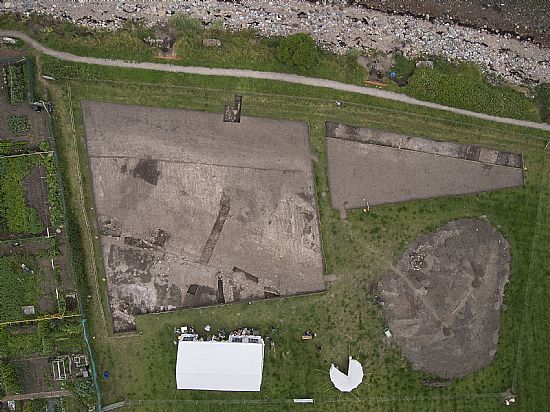
Aerial photo of the site (coastal erosions marked by orange netting) taken by Ed Martin
Our first season working on the Cromarty Medieval Burgh Community Archaeology Project finished up last week, supported by over one hundred volunteers during 3 weeks of fantastic weather. We came down to and recorded the Post Medieval (latest) phase of archaeological remains on the site - the results of which are helping us to learn more about how Cromarty folks lived during the 18th-19th centuries. Many of the artefact recovered are personal objects from the inhabitants, some of whom we know the names.
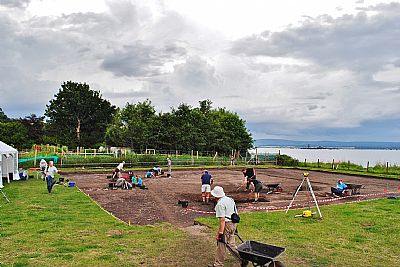
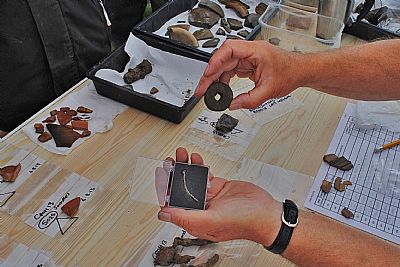
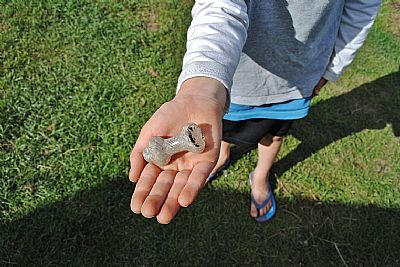
Excavation in progress (left), decorated spindle whorl and twisted bronze? object from Medieval layers (centre), spiral-decorated glass wine stem fragment (right)
Below the 18th-19th c. layers. we have also located substantial and significant Medieval remains. The preservation of the Medieval archaeology is excellent, with well-built stone walls and extensive deposits of fish/shell and ash. Along with high numbers of shaped stone pot lids with Medieval ceramic jug sherds (and a noticable lack of domestic pottery), this evidence supports our belief that Medieval Cromarty was an important burgh, probably sustained by the fishing industry.
We were grateful throughout the dig for visits from interested members of the public and from Ed Martin (aerial photographer), the Inverness Courier, BBC Alba, archaeologists from the Highland Council, RCAHMS archaeologists, ceramics specialists Derek Hall and George Haggarty and the Cromarty Firth Port Authority. We are particularly grateful to our funders: SCAPE/SCHARP, the Highland Council, Hunter Archaeological Trust, Catherine Mackichan Trust, Global Energy Nigg, Cromarty Firth Port Authority and the Cromarty Trust. Over the next year, we will be working closely with project director Steven Birch to process the results from the first season - and hopefully plan for a 2014 season.
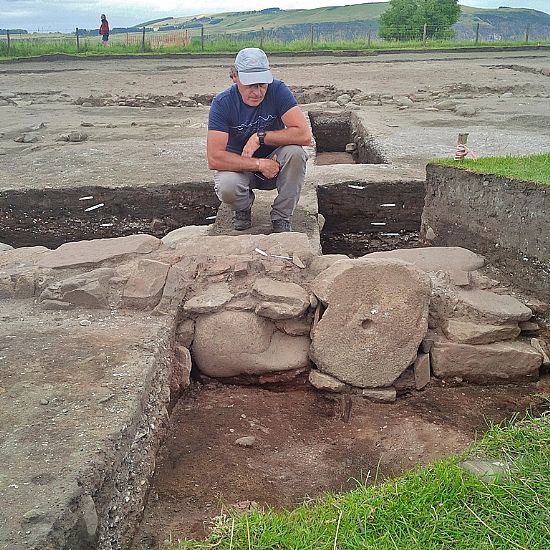
Well-built section of a Medieval building; a rotary quernstone built into one face